

B Mitzvah Presentation by Lila Busby
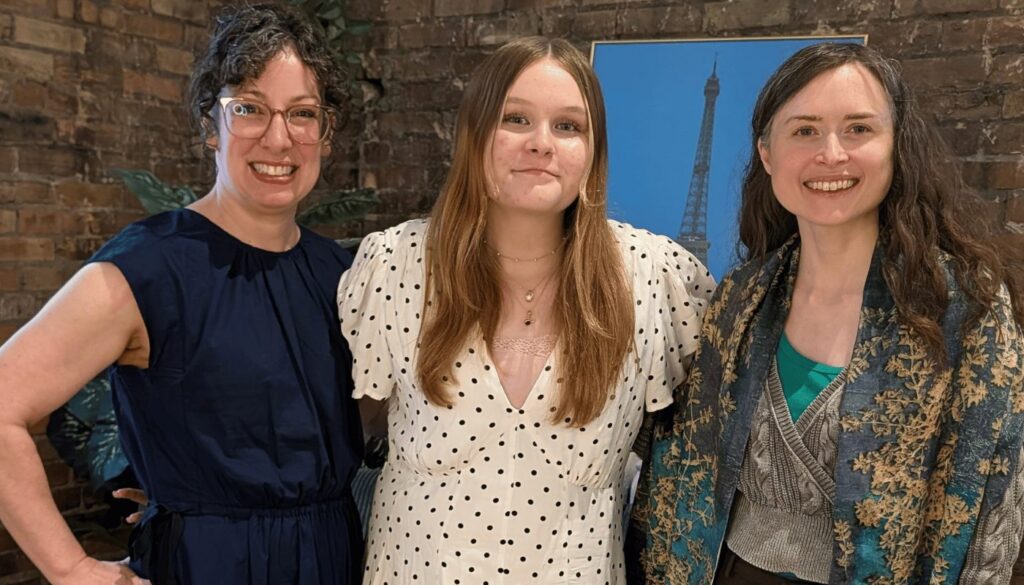
Music has been very important to every part of my life. There is always a song playing. My headphones have never been fully charged, and my life has never been quiet.
For my bat mitzvah project, I chose to focus on a French Jewish singer. French because France is my favorite country. I’ve been there, love how French sounds and I have French heritage from my great-great-grandma. France is one of the most beautiful places I have ever been.
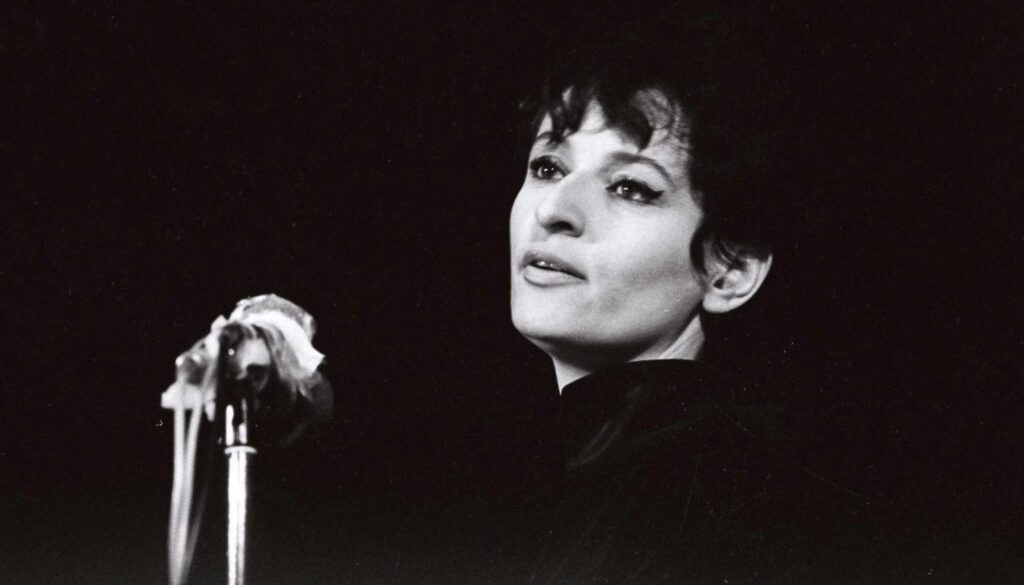
My subject is a singer who went by the name Barbara. Born Monique Andreè Serf, Barbara is the stage name she took when she started performing. It was inspired by her grandmother, whose name was Varvara Brodsky.
Barbara started making music in the late 1940s, and her first songs were released in the late 1950s. She released her last song in 1997, which was also the year she sadly passed. Barbara was and is still very famous in France. One of her hit songs, “L’Aigle Noir” reportedly sold over one million copies in just twelve hours.
I chose to focus on Barbara specifically because of her Jewish background, her life story, and her music. I discovered Barbara about six months ago and have put a lot of her songs on my many playlists.
One of my favorite songs by her is called “Ma Plus Belle Histoire d’Amour” recorded in 1967. The name of this song translates to “My Most Beautiful Love Story.” I think this title matches the song perfectly.
One of the lines in this song is translated to “on the long road that led to you; on that long road my heart was going crazy. The winds of December chilled me to the bone, but I never worried about December if it was for you.”
After looking at the whole song translated, this line stood out to me the most because I think it summarizes the song well in just a couple sentences. It shows the song is about love and longing for the person she is singing about. That’s also my favorite quote from the song. It can be interpreted as a metaphor or literally. Barbara could literally be talking about surviving December, or she could be talking about how she isn’t worried about anything because she loves the person she is singing about–or it could be both.
Barbara lived through World War II when Nazis were killing Jews, but not just Jews. They were also killing queer people, people with disabilities, Romani people, and other minorities. Barbara was only nine when the war broke out, and she was fifteen when she could finally stop hiding. She spent six years hiding from Nazis as a child. She and her family had to move quickly and hide in a lot of different places, but they mainly hid in the French countryside where she and her family spent two consecutive years.
Living through World War II had a big impact on her music. A lot of her songs were about trauma and loss from the war, and the effect the war had on her. Her style of singing sounds very emotional, even in her happy songs. Barbara also mentions wanting peace in some of her songs.
One of Barbara’s most famous songs about the war is called “Göttingen,” which is a German town. In 1964 Barbara was asked to perform in Göttingen; initially she wanted to refuse the invitation because of her trauma from the war, but she ended up accepting. She wrote the song “Göttingen” about her experience visiting that specific town in Germany.
Some of the lines that really stood out to me after I translated this song were “But the children are the same, / In Paris or Göttingen. / Oh, may they never return / Those days of blood and hatred. / For there are people that I love / In Göttingen, in Göttingen.”
This song is one of my favorites because of the backstory. Barbara performed this song to the people in Göttingen while it was only half done because she started writing it that afternoon on the trip to Göttingen. It is interesting to think what it might have sounded like while the song was half done when she first performed it.
Barbara had a giant impact on the chanson music style. Her lyrics were always very poetic. She picked this up from a big mix of French singers, but other French singers picked it up from her. Her vulnerable writing style made others feel comfortable to sing vulnerably, too. Barbara had piano accompaniment in almost all of her songs. This made a lot more people use her style of piano in their songs. Barbara was one of the first women in France and the chanson music style to both write and compose her own songs, so her music made a big impact on a lot of women. She didn’t only impact women in the musical sense. She also changed what physical appearance a woman could show up in with her bold makeup and short hair, which was not common at the time.
Barbara was a remarkable French Jewish singer and composer. I really enjoyed learning about her life and her music.
Did you know? Or Emet offers both youth and adult B Mitzvah programs!