

What Is Humanistic Judaism?
As the Society for Humanistic Judaism describes our movement, Humanistic Judaism “is a movement within Judaism and one of five recognized Jewish denominations. It combines Jewish meaning and culture with a human-centered philosophy of life. It defines Judaism as the historical and cultural experience of the Jewish people while affirming that people are independent of supernatural authority and responsible for themselves and their behavior.”
Our Connection to Jewish Historical and Cultural Experience
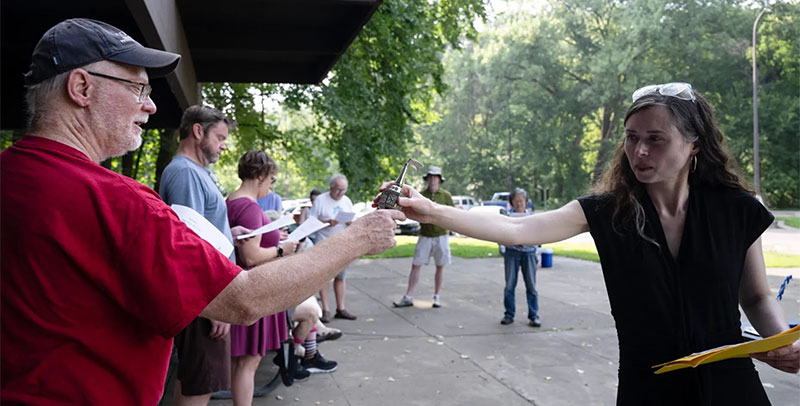
We value and connect with all that’s beautiful, meaningful, and inspiring in Jewish history and culture, including:
- Jewish holidays and life cycle rituals that connect us to our past, present, and future, the earth, and each other
- life-affirming responses to the Jewish experience of oppression – resilience, empathy and solidarity with others experiencing oppression, concern for justice
- commitment to critical thinking, discourse, debate, and humor
- the rich Jewish literary tradition that spans from ancient to modern times and includes many secular, humanistic, and “heretical” strands
- languages that reflect our diversity – Hebrew, Aramaic, Yiddish, Ladino, Judeo-Arabic, and more
- music, from liturgical tunes to klezmer to Yemenite Jewish hip-hop
- food, from charoset to hamantaschen to sabih to bagels and lox
Our Freedom from Supernatural Authority, and Our Power and Responsibility to Improve the World
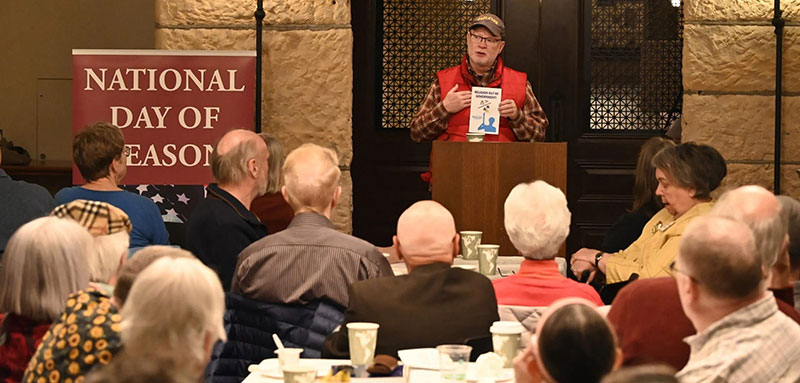
In affirming that people are free from the authority of a god or other supernatural force, we emphasize our power and responsibility to improve the world, ourselves, and our relationships. We don’t pray or wait passively for things to get better; we act to create the change we want to see. We are dedicated to tikkun olam—to repairing the world—through ethical action guided by critical thinking and commitment to social justice.
Our Humanistic Jewish philosophy isn’t glib; we understand the constraints on human action, and we recognize that change isn’t easy. However, Jewish history offers a testament to human power and resilience. We are committed to the idea that change and growth are possible, and that they only become impossible if we don’t try.
How Did Humanistic Judaism Start?
In 1963, Rabbi Sherwin Wine founded the first Humanistic Jewish congregation in suburban Detroit. The Society for Humanistic Judaism describes the movement’s early development under Rabbi Wine’s leadership.
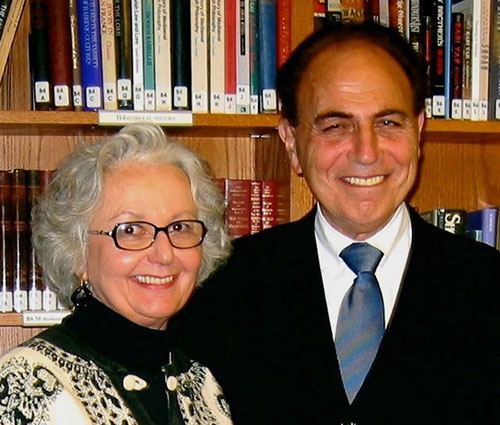
In photo: Rabbi Sherwin Wine with Margo Fox, Or Emet President 2005-2011
In 1965, Time magazine quoted Wine as declaring, ‘I am an atheist.’ With Rabbi Wine as its leader, the congregation eliminated the name of God from services, creating humanistic rituals focused on humanistic values and people’s responsibility for their actions and their world. The article attracted significant attention, leading to the birth of a new denomination within Judaism. The Humanistic Jewish movement has grown from these early beginnings.
While Humanistic Judaism is a relatively new movement, it builds on a long history of secular approaches to Jewishness. What differentiates it, however, from other secular Jewish approaches is its embrace of the synagogue model. We value the ways that synagogue structure and ritual promote inspiration, identity, and community.
What Are the Biggest Differences Between Humanistic Judaism and Other Jewish Denominations?
Humanistic Jewish liturgy is non-theistic. We believe in saying what we mean and meaning what we say. When we light Shabbat candles, our blessing begins with the words “Baruch ha-or ba-olam; baruch ha-or ba-adam,” meaning “Blessed is the light in the world; blessed is the light in humanity.” The words we use reflect the things that we believe in, like the light of truth and goodness that guides us.
Humanistic Judaism affirms “that a Jew is a person of Jewish descent or any person who declares [themself] to be a Jew and who identifies with the history, ethical values, culture, civilization, community, and fate of the Jewish people.” By affirming that Jewishness is a matter of self-identification, not an identity with boundaries that we police on the basis of matrilineal (or patrilineal) descent or conversion, we celebrate Jewish identity in radically inclusive terms. While we offer more formal guidance for adopting Jewish identity for those who find this meaningful, this is an option, never a requirement.
Are you a Humanistic Jew?
Take the quiz to learn more about your alignment with Humanistic Jewish values.
Take the Quiz